
DSLR vs Mirrorless Cameras
Faster, smarter, better — that’s the allure of owning a DSLR (digital single lens reflex) or mirrorless camera. Professional photographers choose DSLR and mirrorless cameras for their ability to capture brilliant, breathtaking images. But these cameras aren’t just for the pros. They’re also the choice of many intermediate users and even beginners.
DSLR vs. Mirrorless Cameras
Most DSLR cameras take photos the same way. Light enters through the lens and bounces off a mirror to travel through a prism before ending up at the viewfinder. When you press the shutter button, the mirror flips up, allowing light to hit the camera’s image sensor which creates the photo. Mirrorless cameras lack the mirror that DSLR cameras have. The absence of a mirror and optical viewfinder are why mirrorless cameras tend to be smaller and lighter than DSLRs.
You can get high-quality photos with either a DSLR or mirrorless camera. This chart lists a few of the benefits of DSLR and mirrorless cameras that should be considered when deciding which type of camera is best for you.
| DSLR Advantages | Mirrorless Advantages |
|---|---|
| Better autofocus system | Smaller and lighter bodies |
| Longer battery life | Silent or quiet shutter features |
| More lens options | Faster shooting speed |
| Optical viewfinder provides better clarity and dynamic range | Electronic viewfinder shows exactly what the camera’s sensor sees |
Camera Kit vs. Camera Only
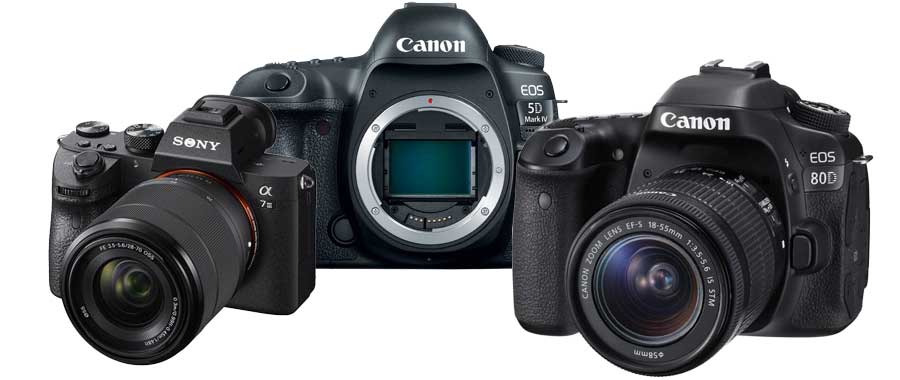
Camera kits include the camera body and one or more lenses. A one-lens kit typically comes with a versatile lens such as one with an 18–55mm zoom factor. With any of the big brand names, you can be confident you’ll be getting a good, general purpose lens that will perform respectably over a wide variety of shooting situations. One of the big advantages of DSLR and mirrorless cameras is your ability to purchase interchangeable lenses to capture more specialized shots such as panoramic landscapes, long zooms and extreme close-ups.
You also have the option to purchase your camera without a lens (body only). Choosing a body-only camera may make sense if you already own a camera along with a collection of lenses, or if you simply prefer to select your own specialty lenses. Be sure to verify your existing lenses are compatible with the new camera you’re considering.
APS-C vs. Full Frame vs. Micro Four Thirds Sensor
The image sensor in digital cameras is a light-sensitive component that digitally records the image once the shutter is pressed. When purchasing a DSLR, you’ll have the choice of selecting a camera with either an APS-C image sensor (also known as a crop sensor), or a full frame image sensor. When purchasing a mirrorless camera, you’ll have those same sensor options, plus the additional option of a Micro Four Thirds sensor.
The image sensor in DSLR and mirrorless cameras is much larger than those found in smartphone cameras or even in point-and-shoot cameras. The size of the sensor ultimately determines how much light it uses to create an image. And more light provides better digital information to create a more highly detailed image. Check out the images and chart on the right to compare full frame, APS-C and Micro Four Thirds sensor sizes to those of other camera types. It’s easy to see that APS-C and full frame camera sensors are significantly bigger.
APS-C sensors are capable of rendering exceptional images, which will be far superior to the images you can capture with virtually any point-and-shoot camera or smartphone camera. A camera with a full frame sensor will capture more light than an APS-C sensor, providing sharper, cleaner images, especially in very low-light situations. In terms of size, the Micro Four Thirds sensor for mirrorless cameras falls somewhere between an APS-C sensor and a point-and-shoot camera sensor. A benefit of having a mirrorless camera with a Micro Four Thirds sensor is that it will be smaller and lighter than a camera with an APS-C or full-frame sensor.
Megapixels

The resolution of digital cameras is measured in megapixels. A megapixel is equal to one million pixels. One pixel is essentially the smallest unit of a digital photo. When it comes to megapixels, you’re probably familiar with the conventional school of thought that states: the more megapixels the better the resolution, and the better the digital image. But actually that’s a bit of a stretch because all megapixels are not created equal.
Smartphone cameras, for example, often sport what sounds like an impressive number of megapixels. After all, it’s pretty amazing to pack 30 or 40 million pixels onto a relatively tiny sensor. But to do so, there is a trade-off. To pack those millions of pixels onto such a small sensor, smartphones, and even point-and-shoot cameras, simply make use of much smaller pixels than DSLR and mirrorless cameras. But small pixels don’t behave as well as much larger ones, such as those found in DSLR and mirrorless camera sensors. The bigger pixels of DSLR and mirrorless cameras absorb light better, produce better colour, and are not nearly as prone to “noise” and colour distortions.
Of course, if all else were equal, more megapixels would be an upgrade. But typically, all things are not equal, especially when comparing megapixels across different camera types. A 12-megapixel DLSR camera, for example, will invariably outperform even a 24-megapixel point-and-shoot camera, or a 40-megapixel smartphone camera.
Image Processors
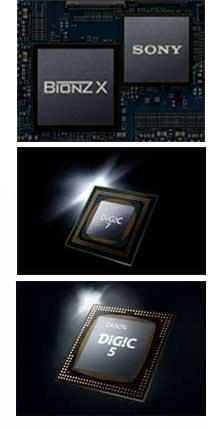
The components found in DSLR and mirrorless cameras are typically more advanced than those found in other cameras. The image processor, which is like the brain of a digital camera, is no exception.
It’s difficult to compare DSLR and mirrorless camera image processors across brands because manufacturers do not usually offer easily comparable specs. And another consideration is the proprietary software that each manufacturer has painstakingly designed to function with their cameras’ image processors. The results of image processors and software working in tandem is essentially what produces many of the artistic and effects capabilities built into DSLR and mirrorless cameras.
You can compare image processors within a given brand, using relevant information such as how much faster their latest image processor is versus their previous model. But that doesn’t help for comparing image processors across different brands. One way to evaluate camera processors between brands is by their ability to meet your needs. Since the speed and capabilities of any digital camera are functions of its processing power, you can look at their ability to handle processor-intensive tasks. For example, how many frames (photos) per second can it handle in burst mode? Does it have on-the-fly autofocusing capabilities in high-definition movie mode?
Lastly, as technology evolves, camera image processors are continually improving. DSLR and mirrorless image processors are significantly faster and more powerful than their point-and-shoot camera counterparts. Beyond that, some cameras have begun utilizing multiple processors, giving them the obvious advantage of further enhancing speed and performance.
Exposure
Aperture range, shutter speed, and ISO sensitivity are the basic elements of exposure. Having full control over these settings as well as many more, sets DSLR and mirrorless cameras apart from other camera types. But if you’re not quite ready to take over the helm of making manual adjustments, don’t despair — the easy-to-use automatic settings will take the guesswork out of getting great shots.
Aperture
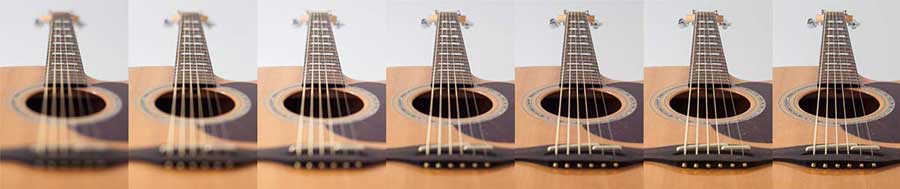
Every lens has an aperture range. Aperture adjustments are measured in units called f-stops. The higher the f-stop number, the smaller the aperture and the less light that passes through the lens. Higher f-stops increase the distance in front of and behind the focus point, making more of the image look “sharp.”
Alternatively, a lower f-stop means a larger aperture and more light passing through the lens. Lower f-stops decrease the distance in front of and behind the focus point, making more of the image look “diffused” rendering a softer, more stylish effect.
If your f-stop is set at f/22, for example, the majority of your scene will be in focus. However, if your lens has the ability to go down to f/2.8, only a small portion of your scene will be in focus while the rest is blurred for that softer, stylized look.
Another advantage of DSLR and mirrorless cameras is the ability to utilize a very fast lens, such as f/2.8 or faster, allowing you to further enhance the camera’s ability to give you great shots, even in extremely low light.
Shutter Speed
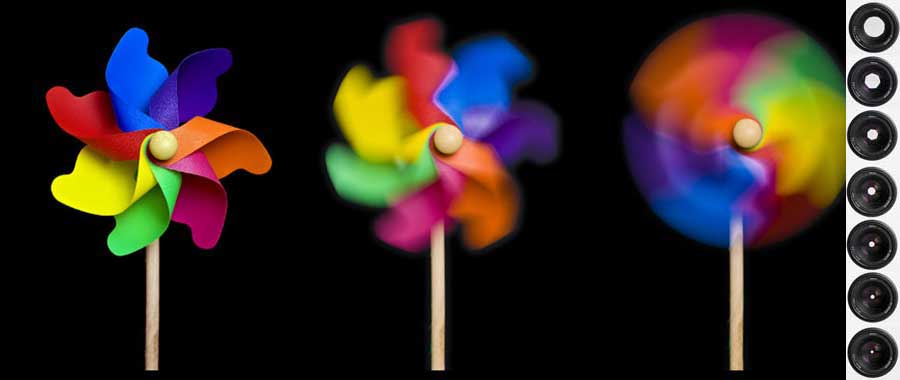
Think of your shutter speed as the gateway that controls the amount of light that streams into the camera. The longer the shutter is open, the more light that is allowed to enter the camera and the greater the image blur. With a DSLR or mirrorless camera, it’s easy to adjust to the perfect shutter speed for any lighting situation. In low-light settings it makes sense to have a longer shutter speed to let in more light. It’s just the opposite in bright situations.
Why does it matter? When it comes to your kid’s soccer game, it won’t matter whether you capture the big goal if the picture ends up looking like a blurry mess. A faster shutter speed will freeze the action, making unwanted blur a thing of the past. On the other hand, you might want a degree of motion blur for style or artistic value. A slow shutter speed combined with subject movement during the shot, will create that motion blur. Alternatively, in a still shot, you might want to let in the brilliance and beauty of all available light. A slow shutter speed will give you that shot.
ISO Sensitivity
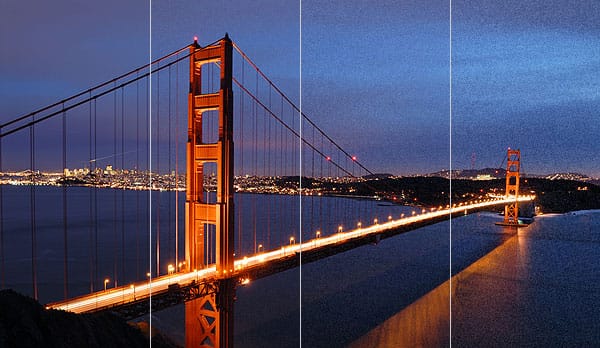
ISO sensitivity is a measure of how sensitive your sensor is to incoming light. An easy way to think about ISO settings is to understand that dimmer lighting conditions call for higher ISO, while brighter scenes require a lower ISO number. DSLR and mirrorless cameras are capable of shooting at much higher ISO numbers than most point-and-shoot cameras. This provides the flexibility to capture shots over a much broader range of lighting conditions, often eliminating the need for a flash in low-light conditions.
A good rule of thumb is to always use the lowest ISO you can get away with. That way you have proper exposure with as little graininess as possible. But with a DSLR or mirrorless camera, even when shooting at high ISO numbers, you’ll get much sharper pictures with far less noise than on a smaller sensor camera, such as a point-and-shoot. Plus, another great thing is that you can choose to manually control your ISO sensitivity. However, if you’re a beginner, you may opt to simply set your ISO to Auto and let the built-in technology do the work for you.
Other Features to Consider
The majority of features discussed next are not exclusive to DSLR and mirrorless cameras. You might find them on your point-and-shoot camera or even on your smartphone’s camera. The important distinction here is that these features work even better with DSLR and mirrorless cameras because of their superior components, speed and performance.
Burst mode
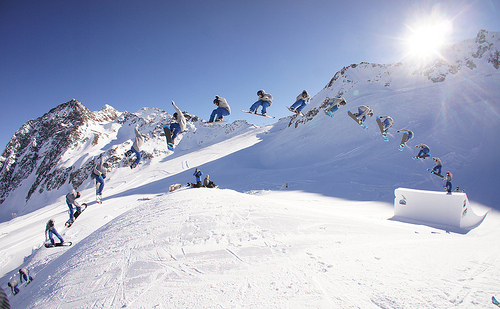
Burst mode refers to taking a rapid succession of photos by holding the shutter button. Burst mode is measured in frames per second, which means the number of pictures taken in one second’s time. Some cameras can take as many as 10 shots per second, or more. After you take a “burst” of multiple photos, you can review them all and choose the best one.
Burst mode requires significant processing speed and power to accomplish the task. That’s why DSLR and mirrorless cameras, with their ample processing power, are ideally suited to shoot in this demanding, high-speed mode. To take advantage of the speed of your camera, you’ll want to outfit it with a suitably fast memory card that can keep up with it.
Multipoint autofocus and scene-recognition modes
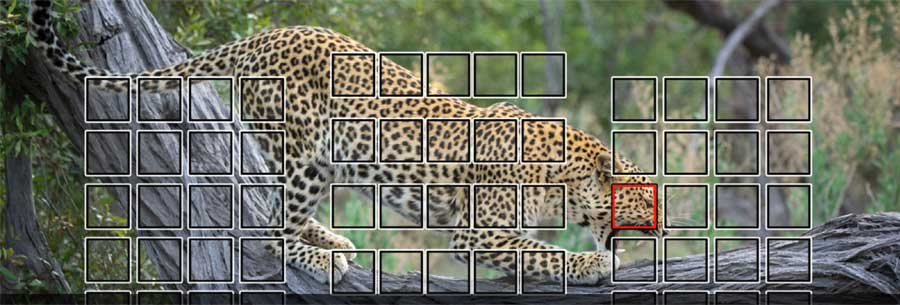
Virtually every camera these days has autofocus, and most cameras let you select a type of scene, such as portrait, landscape, indoor, and modes, etc. So, what more could you need? Actually, quite a bit. The capabilities of DSLR and mirrorless camera multipoint autofocus and scene-recognition modes provide more precise automatic control over a good many more shot settings.
Multiple-point autofocus feature locks onto moving subjects, tracking and keeping them in constant focus, which is great for capturing action shots and is especially useful in video mode.
Cameras may offer automatic scene recognition, selecting the correct mode and the right exposure, so you don’t have to.
Face recognition feature adjusts balance and focus points to show people’s faces in their best light.
Many cameras can make a variety of autofocus and exposure adjustments on the fly — automatically adjusting numerous settings, all in the time it takes to press the shutter button.
The list goes on, depending upon the camera you choose. Regardless of your selection, you’ll find these automatic modes go far beyond autofocusing the camera, making it easy to get great results from the outset.
High dynamic range (HDR)
Cameras with an HDR function can take a number of pictures of each scene you select — all at different exposures. Then, the camera will determine the best parts of each photo to keep, as well as which parts to toss. Here’s where the magic happens. The camera then combines the best parts of each photo into one great shot.
Now suppose for a moment that when the lighting was just so, you had framed up a picturesque sunset shot. And you were pretty sure your exposure settings were just right to capture that image perfectly. So you took the photo. When you reviewed the shot, you discovered you actually needed a little more light to create just the right effect. By that time, it’s too late. But in HDR mode, you’d have captured multiple shots in rapid succession, each at a slightly different exposure. Then voilà, your camera would automatically combine the best elements of each shot to create a photo that’s superior to any of the individual shots
Video mode
Another way DSLR and mirrorless cameras set themselves apart is in video mode. Because of their light-gathering sensors and lenses, these cameras are able to capture Full HD videos that feature highly detailed images, and bright, brilliant colours. Some higher-end DSLRs and many mirrorless cameras even have the ability to record video in 4K. Plus, more and more cameras include special autofocus technology for video, so you can keep moving subjects in focus to capture the perfect video.
Connectivity
Let’s skip ahead — you’re at your kid’s game with your new camera. Your kid breaks away with the ball, shoots, and scores. Now what? Share with grandma and grandpa, of course. But why wait until you get home to upload everything? Features like built-in Wi-Fi, NFC (near field communication) and Bluetooth allow you to easily upload your photos to a smartphone or tablet for instant, wireless sharing. Some cameras also have a compatible app that can be used to control the camera from your mobile device, and some even feature GPS technology that allows you to tag where your photos were taken.

Comments are closed here.